Thinking about adapting your home for the future? This article explores how thoughtful extensions and reconfiguration designs can help homeowners create more practical and accessible living spaces. Using an active residential project in Shrewsbury as an example, we look at different layout options and how small design changes can create new ways of living.
There often comes a point where a home that once felt perfectly suited to everyday life starts to feel slightly out of step with how it’s actually used.
The stairs become more noticeably challenging. Certain rooms are used less often. And while the house still holds years of memories and meaning, it doesn’t always feel as easy or practical as it once did.
For many homeowners, this leads to a difficult question: do you downsize and move somewhere new, or do you work on adapting the home you already love?
Increasingly, the answer is to stay and redesign the home so it continues to work for the future – and we’re a fan of that option!
How to Future Proof Your Home
Future-proofing a home is really about making it more flexible. Not designing for one fixed stage of life, but creating spaces that can evolve as needs change over time.
That often means improving day-to-day comfort, reducing reliance on stairs, making better use of the existing space, and thinking carefully about how the home will function not just now, but in ten or twenty years time.
In practice, one of the most effective ways we can do this is through extension and reconfiguration.
A common thing we do on projects like this is to introduce a ground floor primary suite. On paper, it sounds like a simple addition, but in reality it can completely change how a home works. The main bedroom moves to the ground floor alongside key living spaces, making everyday life more practical and comfortable long term, while the rest of the house continues to function well for visiting family and guests.
An Example – Project Sunfield, Shrewsbury
When you’re thinking about adapting your home in this way, it’s important to properly explore the different ways the home could work before committing to a direction.
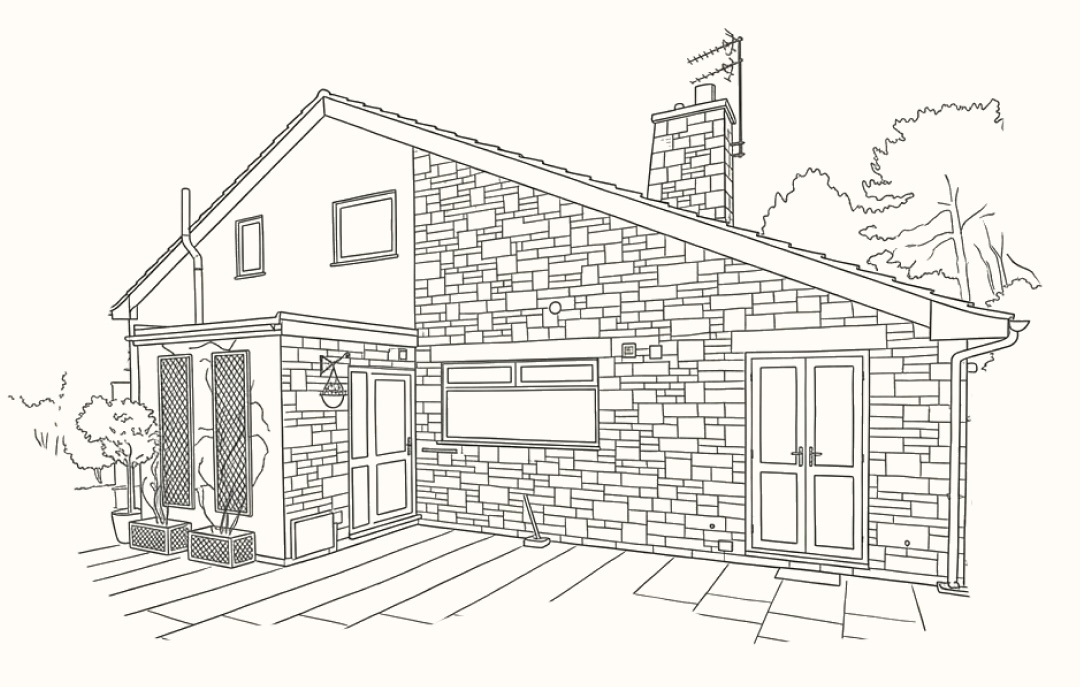
A good example of this can be found in a current residential project we’re developing internally, known as Sunfield in Shrewsbury, Shropshire.
It’s a detached chalet bungalow where we’ve been testing several extension and reconfiguration options to understand how relatively small shifts in layout can create very different ways of living.
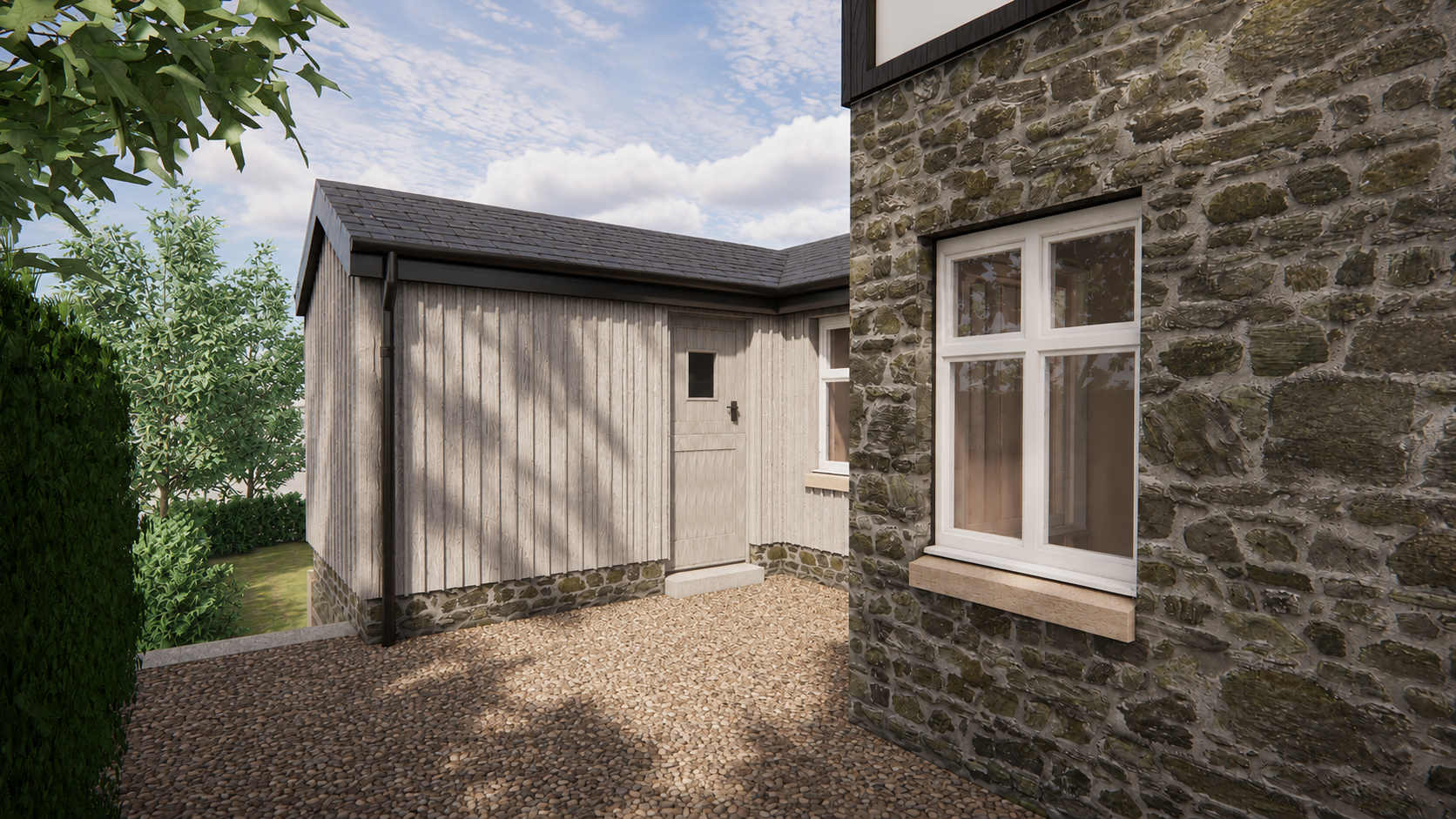
Each proposal includes a new ground floor primary suite with direct garden access, alongside an extended kitchen and living arrangement designed to improve long-term practicality, comfort, and flow throughout the home.
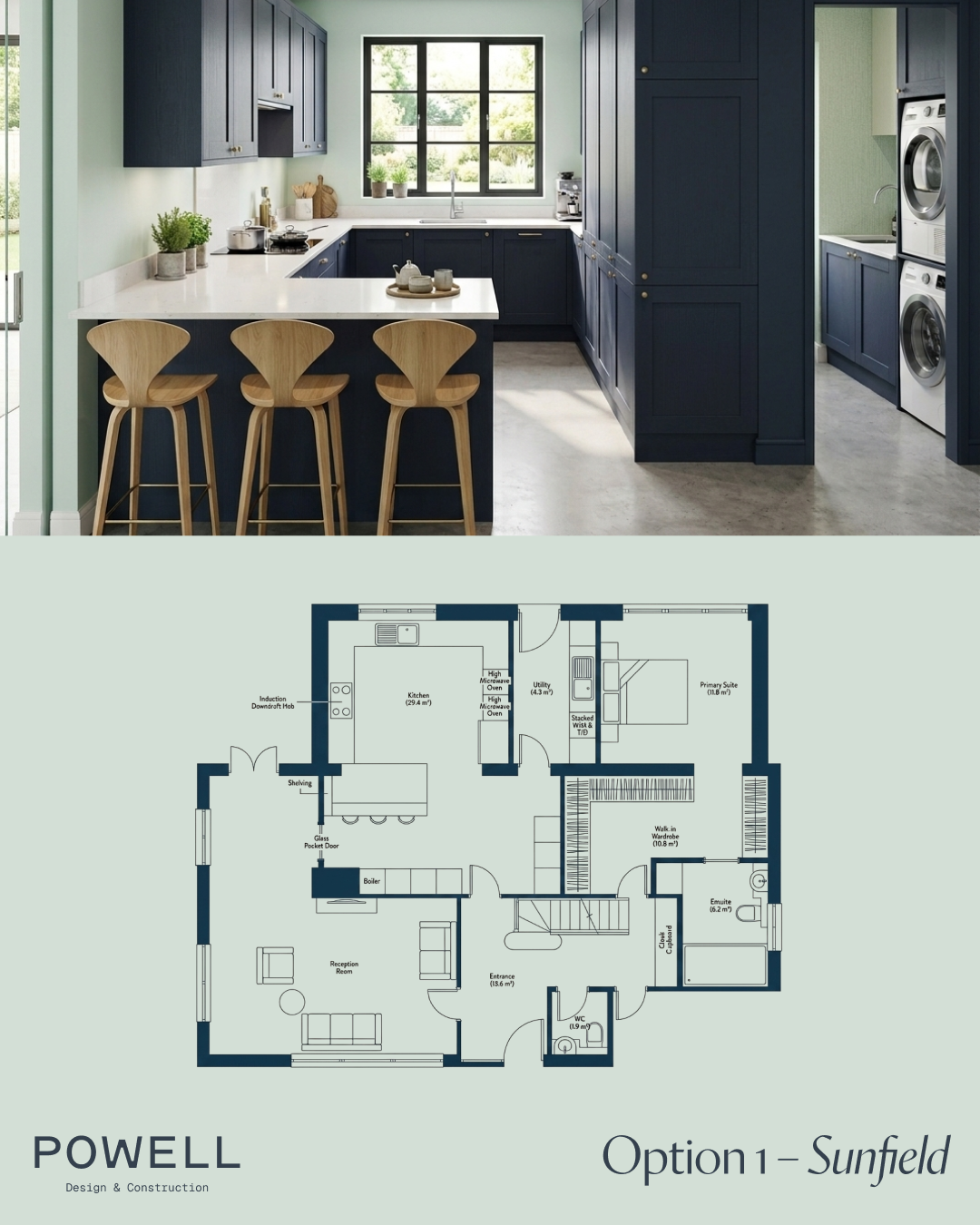
Option 1
The first option focuses on simplicity and practicality. The deeper extension allows both the kitchen and primary suite to extend fully in line with one another, creating a balanced rear addition.
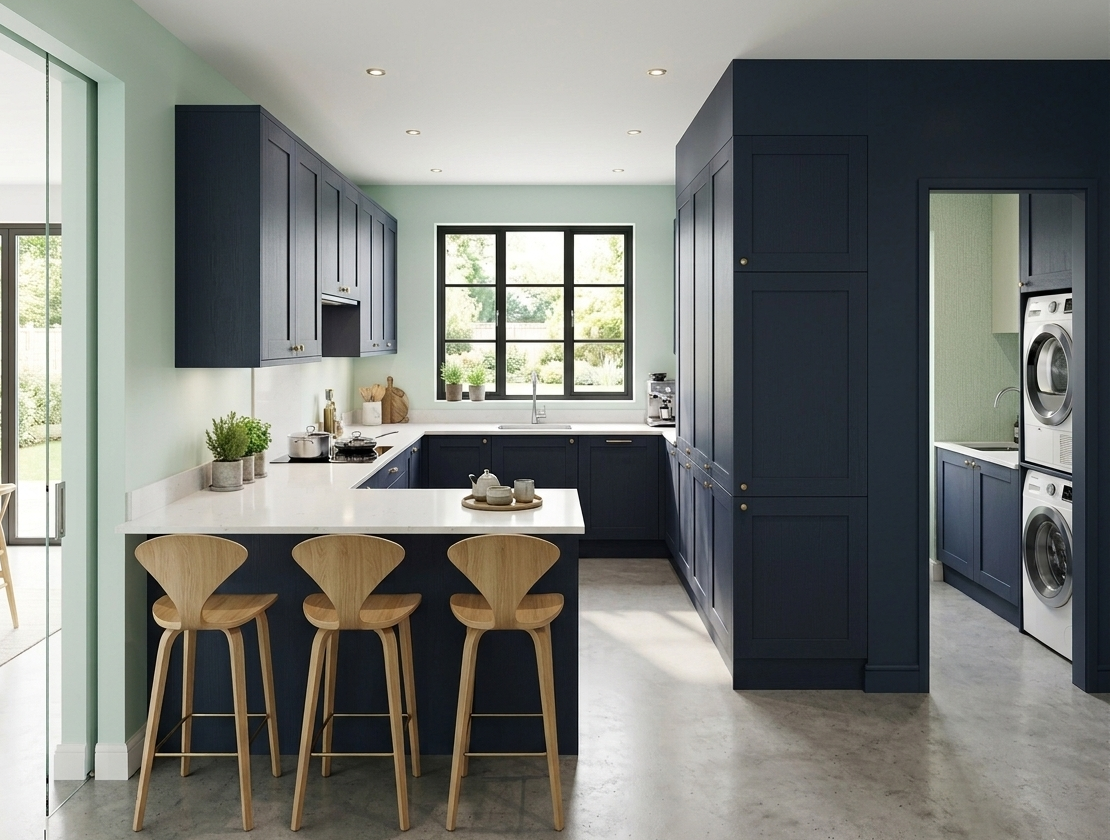
The layout features a compact U-shaped kitchen with a dedicated breakfast bar, connected to the reception room via a space-saving pocket door. By slightly reducing the kitchen footprint, space is created for a dedicated utility room with external access, helping keep the main living areas organised and clutter-free.
The primary suite feels tucked away and private, accessed through a generous walk-in wardrobe that acts almost like a private hallway into the bedroom. The ensuite sits beyond the wardrobe while still feeling connected to the suite itself.
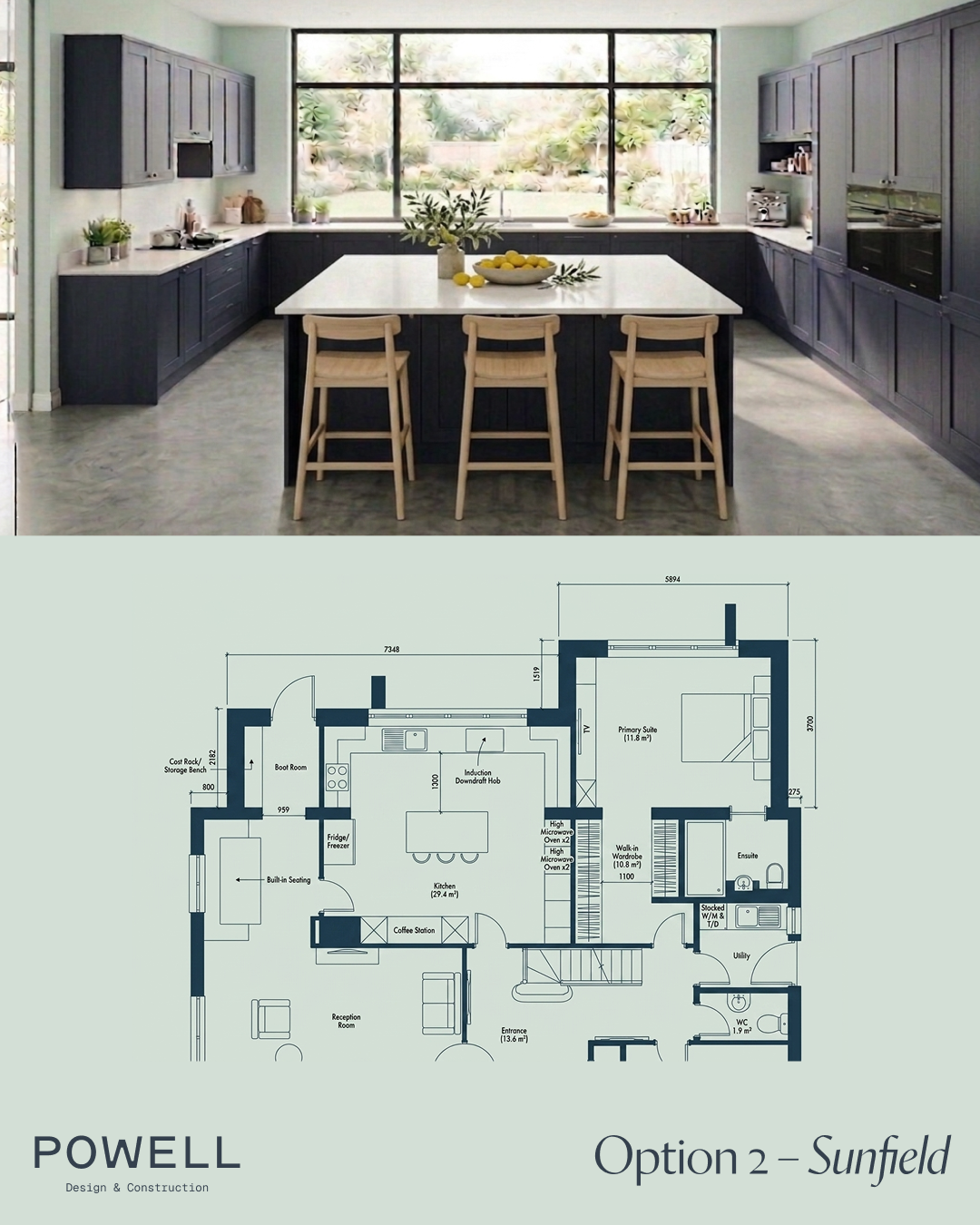
Option 2
Option 2 prioritises openness and social living. The kitchen extension is shorter than the primary suite extension, but removing the dedicated utility room allows the kitchen to maximise its width and feel far more open-plan.
A large island with seating becomes the centrepiece of the space, with cabinetry wrapping around the room and large bifold rear windows making the most of the garden views.
This option also introduces a dedicated boot room alongside a built-in banquette seating nook that makes better use of the narrower part of the reception room.
The ensuite is accessed directly from the bedroom for additional privacy, while a separate WC and utility area remain accessible from the main house.
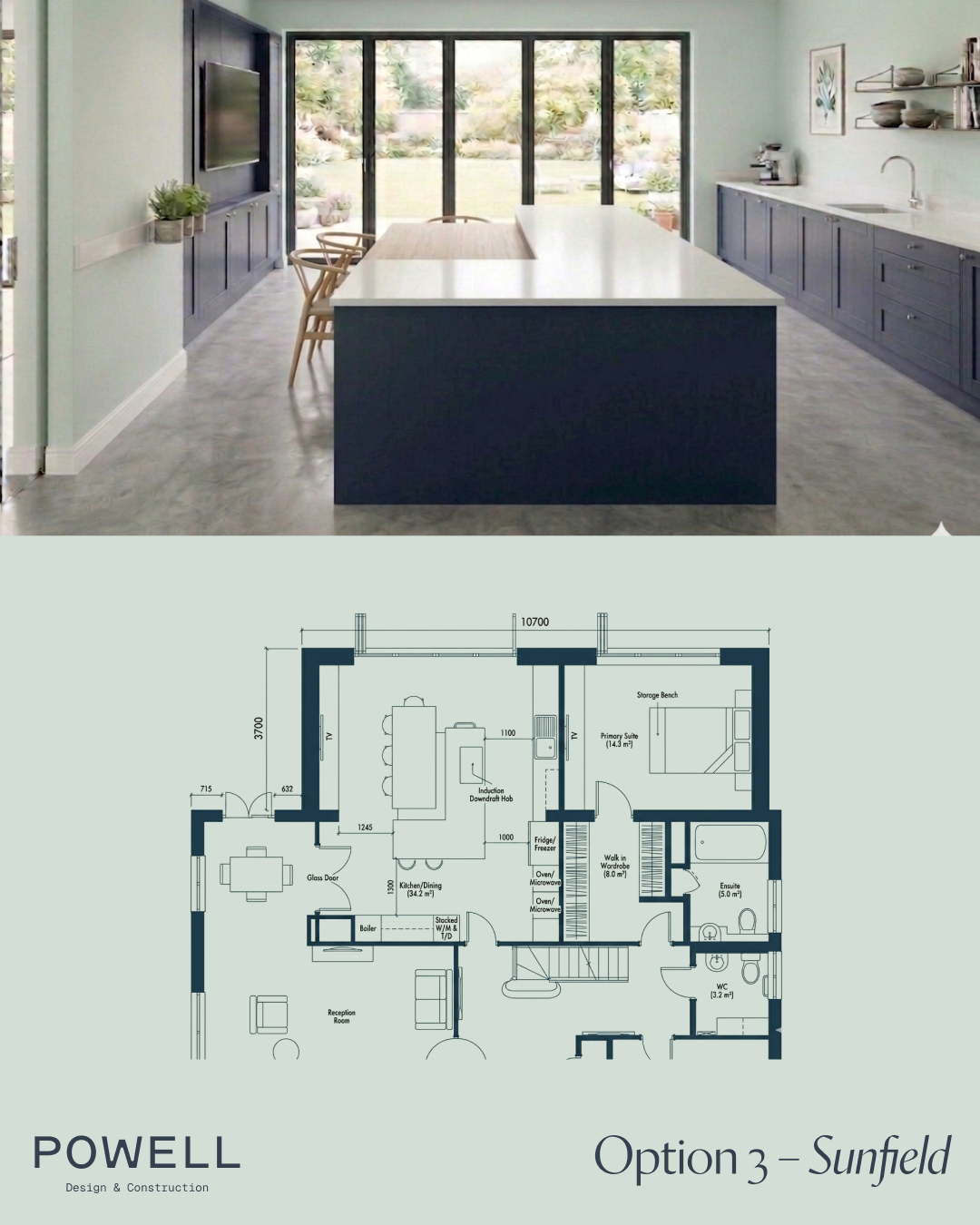
Option 3
This concept creates a much more open and entertainment-focused layout. The extension runs fully in line with the bedroom suite once again, creating a long open-plan kitchen and dining area centred around garden access through large bifold doors.
The kitchen design features a large reverse L-shaped island with an adjoining dining section for bar seating, alongside wraparound cabinetry and a dedicated TV area. Double doors connect the kitchen back into the reception room, giving flexibility between open and closed living.
The primary suite remains private with a smaller walk-in wardrobe and concealed ensuite access through a hidden wardrobe door, while a dedicated WC is retained near the front entrance.
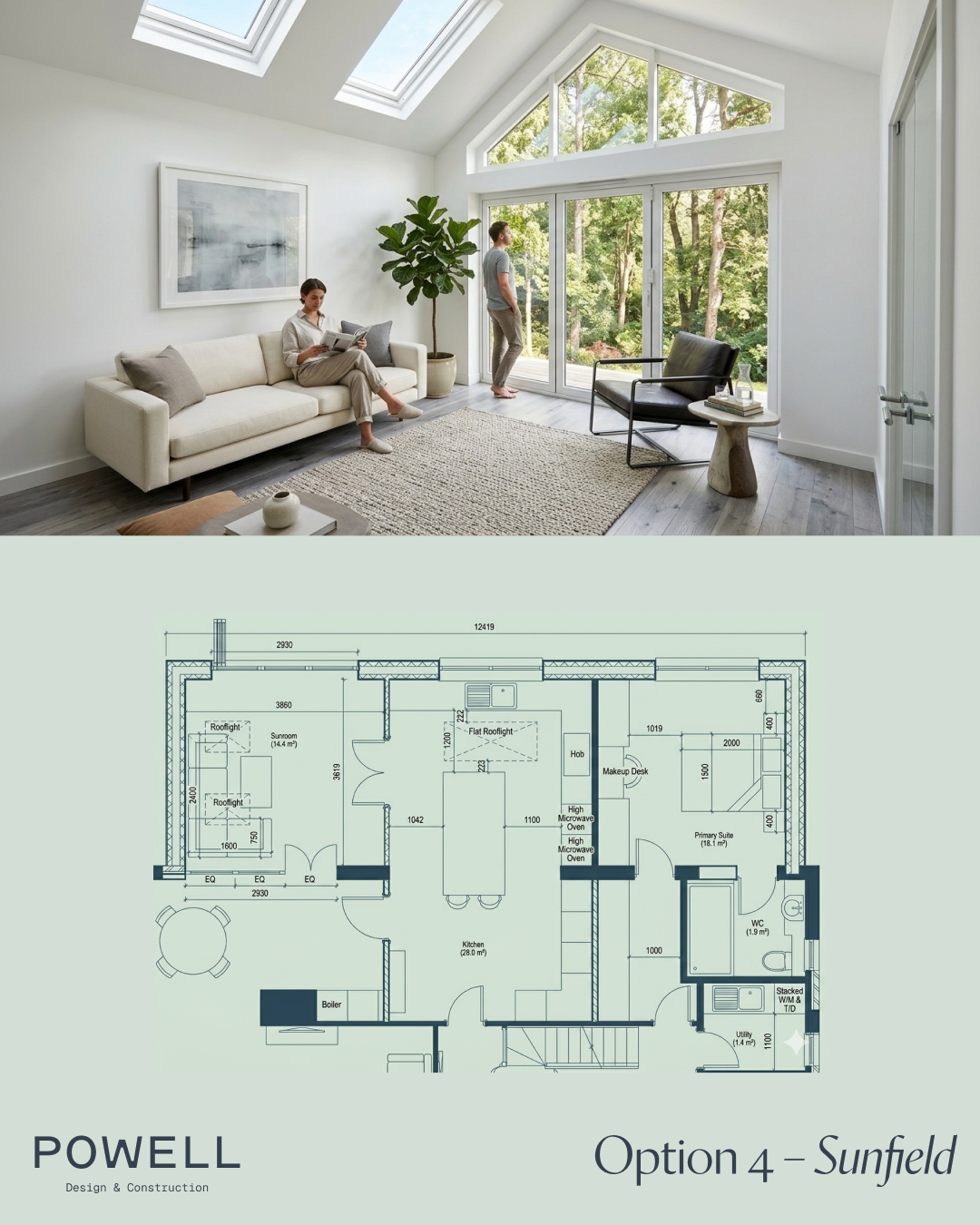
Option 4
The fourth design concept takes a slightly different approach, combining open-plan kitchen living with a separate sunroom space designed to feel calmer and more relaxed.
The extension once again runs fully in line with the primary suite, but instead of creating one large entertaining space, this layout introduces a dedicated garden room connected directly off the kitchen through double doors. Featuring large apex glazing, rooflights, and full-height doors onto the garden, the sunroom becomes a bright secondary living area that feels closely connected to the outdoors.
The kitchen itself remains open and spacious, centred around a large island with seating and generous circulation space around it. Full-height cabinetry and integrated appliances keep the layout clean and streamlined, while maintaining a strong visual connection between cooking, dining, and garden views.
The primary suite is again positioned more privately to the opposite side of the extension. A separate WC and utility room are retained near the entrance to the suite, helping support practicality for day-to-day living without interrupting the openness of the main living spaces.
-
Even though the overall building and extension size stays broadly similar across all the design options (not including the additional sun room extension in Option 4), each layout creates a noticeably different way of living.
This early design stage is often where the most valuable decisions happen, because it allows homeowners to properly understand how layout affects daily life before committing to a final direction.
Adapt Your Home or Move On?
More homeowners are choosing to adapt rather than move.
Downsizing or relocating might seem like the straightforward answer, but it often comes with compromises – less space, a different location, or leaving behind a home full of memories that still feels fundamentally right, just no longer as practical as it once was.
With the right architectural thinking, an existing home can often be reshaped to offer a better balance: improved accessibility, smarter use of space, more thoughtful separation between private and shared areas, and a layout tailored specifically to how you want to live in the years ahead.
Future-proofing a home isn’t about adding more for the sake of it. It’s about making the right changes in the right places. Improving comfort, clarity, and usability so the home continues to support everyday life as it changes over time.
If a home is starting to feel slightly less practical than it once did, it doesn’t necessarily mean it’s time to leave it behind. Often, it just means it’s time to rethink how it could work better.
Would you like to speak to us about the possibilities within your own home?