If you own a period property in Staffordshire, Shropshire, or Cheshire and you're exploring ways to improve its energy efficiency, you've likely come across a frustrating issue early on: most older homes simply weren't built for modern insulation methods.
Most homes built from the 1930's onward use cavity wall construction, which is a gap between two layers of brick that can be filled with insulation relatively easily.
Period properties on the other hand, particularly cottages built with solid stone or solid brick walls, don't have this gap, so there's nowhere to inject insulation into.
This leaves homeowners with two real options:
a) insulate internally, which reduces the size of each room
b) or insulate externally, which adds a layer to the outside of the building instead
For many older properties, external wall insulation (EWI) is the better solution. It allows you to significantly improve how well your walls retain heat, without losing a single centimetre of internal space, something that matters enormously in period homes where room proportions are often part of the character.
A typical EWI system adds around 100mm of insulation board to the exterior walls, which is then finished with a render coat.
Done well, the improvement in thermal performance is substantial, while the interior of the home remains untouched.
On a heritage or older property, the render finish needs careful thought as well. The wrong choice can make a building look out of place, and in some cases may require planning permission, particularly on properties within conservation areas or with specific local authority considerations. Working through the design and planning process properly from the outset avoids costly issues later.
External wall insulation is currently rated at 0% VAT in the UK as a recognised energy saving measure. This is well worth factoring into your renovation budget early, as it can make a meaningful difference to overall project costs.
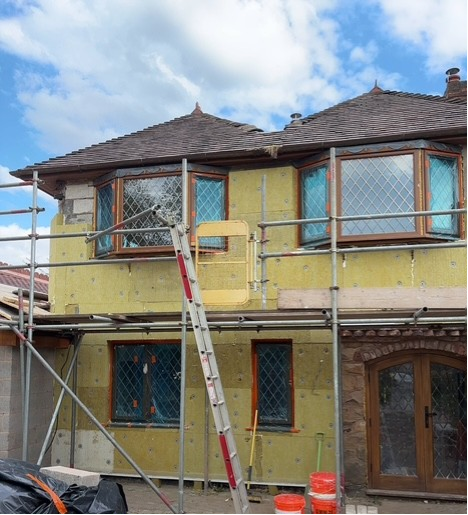
A real example of external insulation: Acorn Cottage
We recently completed external wall insulation as part of a wider renovation at Acorn Cottage, a period property here in Staffordshire. The property had solid walls throughout, so internal insulation would have meant losing valuable space. We added external insulation boards across the building, followed by a render finish chosen specifically to match the property's original appearance, keeping it in keeping with the existing architecture.
Considering insulation for your own period property?
If you're planning a renovation of an older or period property in Staffordshire and want to explore the right insulation approach for your home, we'd be happy to talk through your options.