We round-up our favourite trends and ideas spotted at the Chelsea Flower Show 2026, and share how we see them influencing the way we design real-life residential gardens that work for everyday families.
The Chelsea Flower Show always leaves us feeling inspired, and this year’s exhibition was no different!
Not because we expect residential gardens to look like the show gardens, but because it’s a great insight into how landscape design is evolving.
New planting ideas, materials, and approaches to outdoor living all gradually filter into our everyday gardens, so it’s important for us to stay up to date and take note of what feels relevant.
Our role is to take those larger ideas and translate them into practical, realistic gardens for everyday life, budgets, and maintenance levels.
Here are a few of our favourite things from the Chelsea Flower Show 2026, and how we see them influencing our own residential garden designs:
Natural Curves and Organic Forms
We noticed a big move away from rigid modern garden layouts this year, with no harsh straight lines in sight.
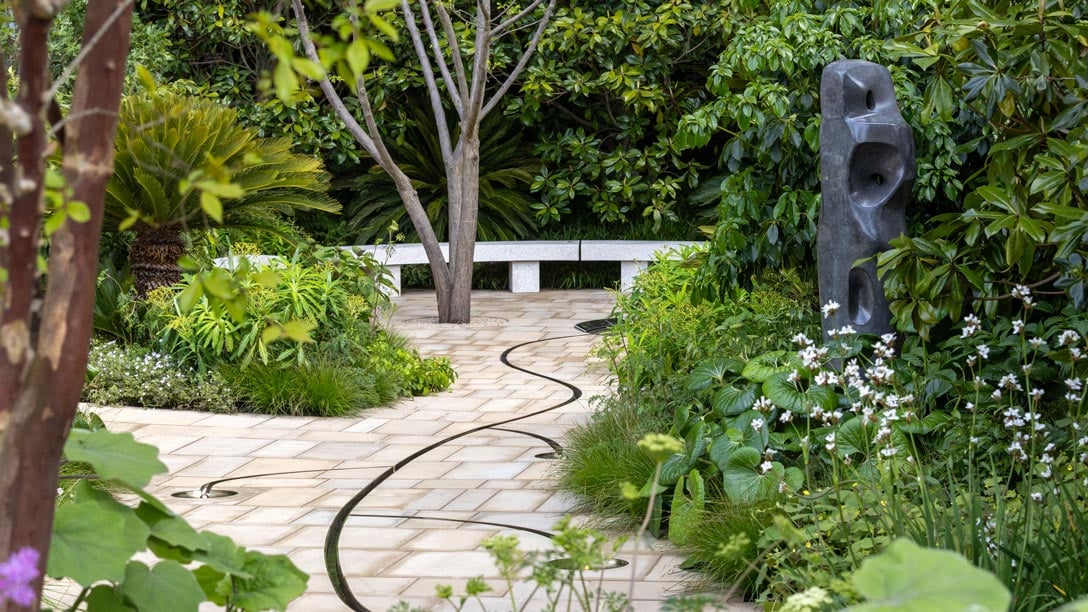
Instead, many of the gardens embraced softer curves, winding pathways with loose edging, layered planting, and spaces that felt almost carved naturally into the landscape.
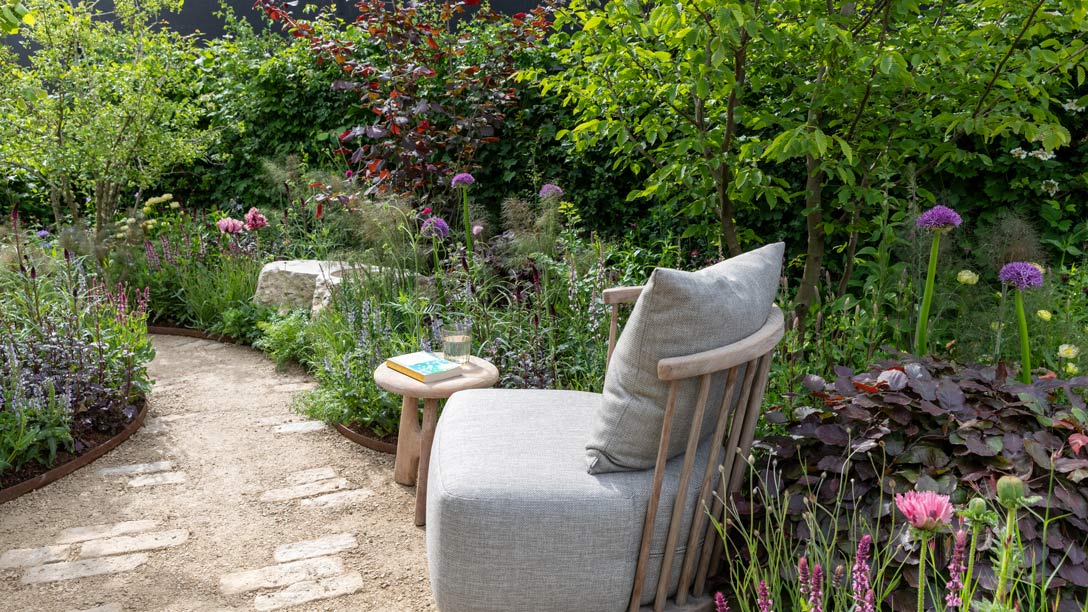
Tom Stuart-Smith’s Tate Britain Garden combined gently curving reclaimed pathways and seating areas to create something really immersive and calming.
We think there is something really grounding and atmospheric about gardens that feel organic in form.

It’s an approach we’ve actually been using more in our own residential work recently, including projects like St Johns in Ashbourne, where a curved patio and softened borders help the landscape feel more embedded into the surrounding environment rather than imposed onto it.
Creating Dimension, Layers, and Flow
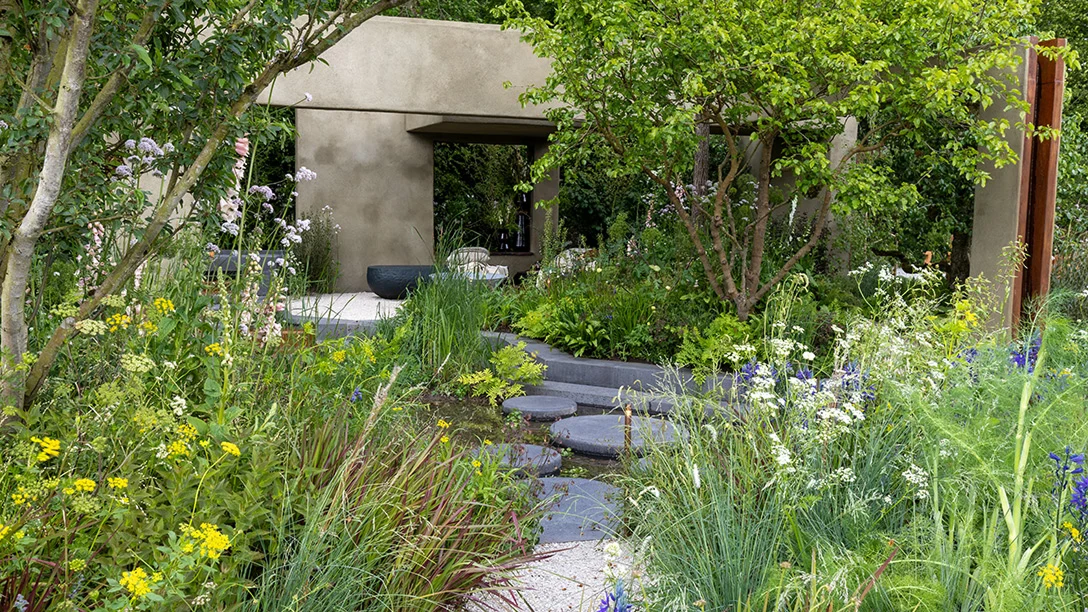
Another major takeaway was the way that the designers used layers and movement to create depth within spaces.
The Chelsea gardens this year felt less like one-dimensional outdoor spaces and a lot more like journeys. There were framed views, changes in level, layered planting, sheltered corners, and carefully designed focal points that encouraged movement and zoning through the garden.
In many ways, it feels very similar to good architectural or interior planning, something very familiar to us.
We’re glad to see outdoor spaces designed as extensions of the home, with dedicated zones for dining, relaxing, entertaining, cooking, quiet retreat, and family gathering.
Designing Smaller Spaces More Cleverly
One thing Chelsea did brilliantly this year was show how more compact garden spaces can feel beautiful yet functional too.
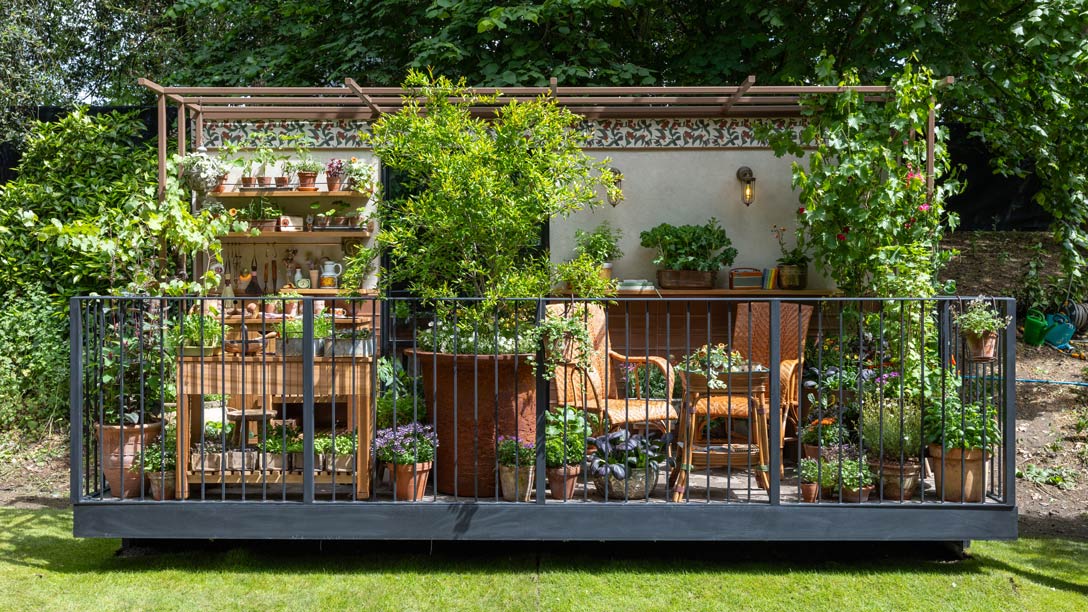
The ‘A Little Garden of Shared Knowledge’ exhibition by Katerina Kantalis made clever use of height, vertical structure, vertical planting, canopy planting, small pergolas, layered shelving, and modular layouts to maximise usable space – even if you were to only to have a small balcony space.
This is particularly relevant to the residential gardens we work on, where space is often limited.
Adding overhead structure, layered planting, pergolas, climbing plants, or dedicated storage and potting areas can completely change how a smaller garden functions without making it feel overcrowded.

Low Maintenance but High Impact
Another trend that continues to grow is the move towards resilient, lower-maintenance planting schemes, perfect for the busy families and homeowners we often work with.
Chelsea 2026 featured a lot of drought-tolerant species, ornamental grasses, naturalistic borders, and climate-resilient planting throughout many of the gardens.
It shows that we are having to become much more conscious of how planting choices need to evolve alongside our climate. Tom Stuart-Smith spoke about how the next 20 years are likely to significantly change the types of plants that will thrive in UK gardens as temperatures continue to rise and weather patterns become less predictable.
That is something we should all be thinking about when designing and planting gardens now, not just how a garden looks today, but how it will continue to perform and adapt in the future.
Wildlife-Friendly and Naturalistic Planting
Wild, softer planting schemes were everywhere this year, and honestly, we love seeing it!
We've had many years of seeing perfectly manicured lawns on Instagram, but it seems gardeners are really embracing naturalistic planting in a much less polished way than before.
Gardens featured ornamental grasses, pollinator-friendly flowers, edible planting, self-seeding plants, and even areas where “weeds” were intentionally celebrated for biodiversity benefits.
We think there is something refreshing about gardens feeling slightly imperfect.
Perfectly manicured lawns and heavily controlled planting can look beautiful, but softer and more naturalistic landscaping often feels far more calming, immersive, and realistic to maintain. It also encourages biodiversity, wildlife, and seasonal movement throughout the garden.
Water Features for Wellbeing
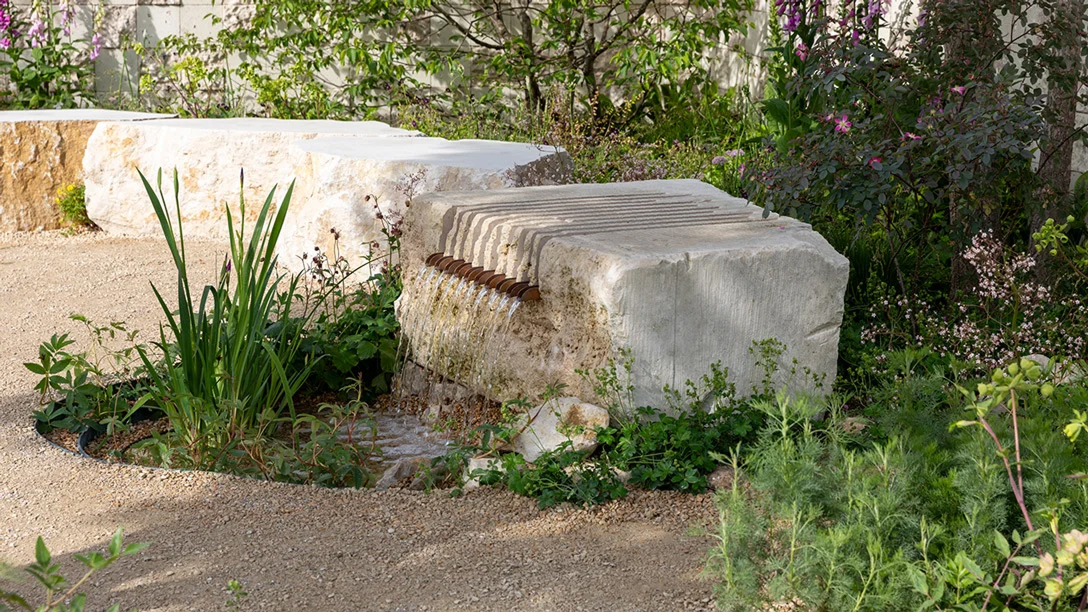
Water remained a huge feature throughout Chelsea again this year, but in a quieter and more sensory-led way.
Rather than dramatic statement ponds or large features, many gardens used gentle flowing water, shallow reflective pools, rain-fed rills, and calming sound elements integrated naturally into the landscape.
This is something we strongly connect with, and would love to do more within our residential work.
When people think about wellness spaces or spas, water is almost always part of that experience. The sound of moving water immediately changes how a space feels. It slows things down, grounds us.
Why should our gardens not do the same?

Water doesn't have to be large or complicated to have impact, especially in smaller residential gardens. There were some really clever, practical ideas for bringing water into everyday spaces. Rain chains replacing traditional downpipes, slim vertical water walls, shallow rills, and even simple bird baths with small solar fountains all showed how water can be introduced without requiring big space or high maintenance.

We really like this approach because it feels achievable for real gardens. Sometimes it is the smallest sensory details, a soft trickle of water near a seating area or birds gathering around a shallow bowl, that completely change how a space feels.
Outdoor Kitchens and Alfresco Living
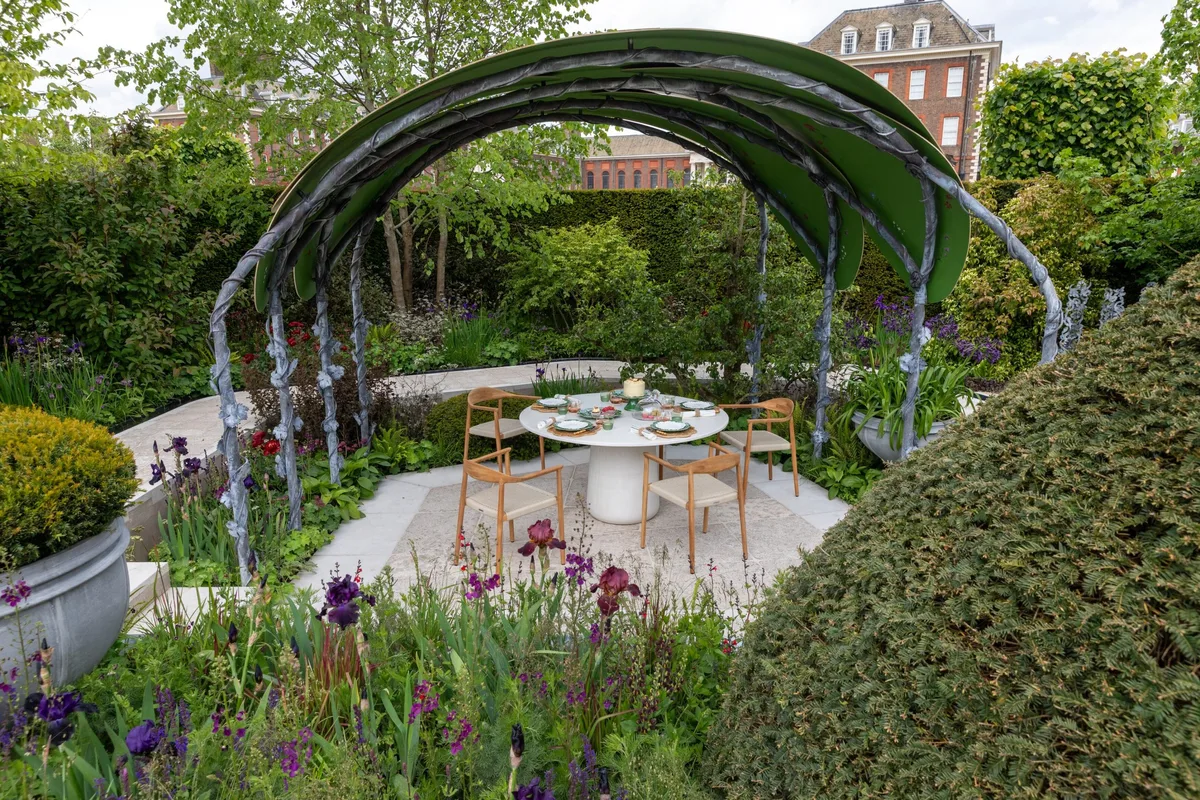
Outdoor kitchens and alfresco dining spaces continue to grow in popularity, with a particularly noticeable trend towards covered seating and more permanent outdoor living setups.
People want gardens that encourage them to slow down, cook outside, gather with friends, and spend more time connected to nature.
We probably have a soft spot for this trend because outdoor dining has always been such an important part of our own family life, especially growing up around Mediterranean culture where gardens and outdoor spaces are naturally part of everyday living.

We absolutely loved working with HEX Living on the bespoke outdoor kitchen at our Ashbourne Retreat project in the Peak Distrcit last year.
Designing for Real Life
Trends are inspiring, and there is always value in seeing how the industry evolves, but the most successful gardens are always the ones designed around the people using them.
The best residential gardens are not necessarily the most expensive or elaborate. They are the ones that genuinely improve everyday life. Gardens that feel calming, practical, immersive, easy to maintain, and connected to the people who live there.
We design and build gardens across Stoke, Staffordshire, Shropshire, and Cheshire, typically working on small to medium residential spaces. That means we are always very conscious of how to be realistic with space, but still push for maximum impact in terms of layout, function, and planting.
That balance is really at the core of what we do. Making sure every square metre has purpose, while still creating gardens that feel open, generous, and enjoyable to spend time in.
So, whilst we absolutely love Chelsea Flower Show and all the ideas in this article, functionality is always the key when we're designing residential outdoor spaces 🌿